Intro
Before you start learning how to read Amharic words, many beginners first ask me, “What is an alphabet called in Amharic?” or “How many letters do I really need to memorize?”
These are good questions. In this post, I will answer them clearly using my years of teaching Amharic to non-native speakers. I will explain the terms, the real number of letters, and most importantly, which letters you can ignore as a beginner.
Do not worry. You do not need to memorize all 258. I will show you exactly what matters first.
1. What Does “Alphabet” Mean in Amharic?
In Amharic, “alphabet” is called “YeFidel gebeta” (የፊደል ገበታ), which literally means “the chart of fidel”—the large paper that includes all the Amharic letters together.
- “Letter” (singular) is “hohie” (ሆሄ)—a single character.
- “Letters” (plural) is “hohieyat” (ሆሄያት)—letters or spellings.
- “Word” is “Qal” (ቃል).
- “Amharic” is “Amarigna” (አማርኛ).
- “Language” is “Quanqua” (ቋንቋ).
Many people ask about these terms, so I wanted to clarify them first.
2. How Many Letters Are in the Amharic Alphabet? (The Real Answer)
One of the most common questions Amharic learners ask is, “How many letters are there in the Amharic alphabet?”
You might have seen different numbers online, but based on my years of teaching Amharic, the correct answer is this:
The Amharic alphabet, known as Fidel Gebeta (ፊደል ገበታ), consists of 258 core consonant-vowel combination letters.
Let me break that down for you:
| Type | Count | Explanation |
|---|---|---|
| ✅ Pure consonant letters | 34 | The foundational forms, including ‘ቭ’ (ve), which is often left out in many Fidel charts. |
| ✅ Standard consonant-vowel combinations | 204 | These make up the majority of everyday written Amharic. |
| ✅ Hybrid or irregular letters | 20 | Crucial variations that enhance the language’s phonetic range. |
| Total | 258 |
3. Why Do Some People Say 33 Letters?
Many blog posts and even textbooks claim that Amharic has only 33 base consonants, each with 7 variations. But this is inaccurate and often confuses learners.
The truth is
- Amharic has 34 base consonants, not 33.
- Most of these have 8 forms, not just 7.
- The 8th form includes hybrid characters, which play a real role in the modern language.
As someone who has worked closely with learners from all backgrounds, I have seen how this misunderstanding can slow progress. That is why it is important to start with the right information.
4. What About Rare or Unused Letters?
In addition to the 258 main letters, there are 10 or more archaic characters you will likely never use. These include symbols like the following:
ኰ, ኲ, ቊ, ቈ, ኊ, and ኈ
They exist in traditional Amharic alphabet charts, but they are not used in modern writing or speech. Their origins are more historical than practical. You can ignore them completely as a beginner.
5. Do You Have to Memorize All 258?
Not at all.
Even native speakers do not use every single letter in daily life. Many of them are rare, obsolete, or used only in religious texts.
In fact, out of the 258, you will regularly use only a much smaller group. That is why I always tell my students the following:
Focus only on the most essential letters first.
I will show you exactly which ones to learn—and which ones you can safely skip for now.
6. Similar Sounds, Different Shapes
Another challenge for beginners is that some letters look different but sound the same — or nearly the same. Here are a few examples:
| Sound | Letter Families | Total Letters | You Only Need |
|---|---|---|---|
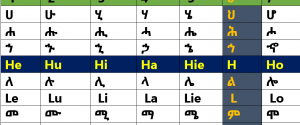
| Three “h” sounds | ህ, ሕ, and ኅ | 22 letters across their full sets | 8 common ones |
| Two “s” sounds | ስ and ሥ | 18 letters | 8 common ones |
| Two “e” sounds | እ and ዕ | 17 letters | 8 common ones |
| Two “ts” sounds | ጽ and ፅ | 17–18 letters | 7–8 common ones |
Bottom line: You do not need to learn every variation. Focus on the commonly used ones first.
7. Final Word: Don’t Feel Overwhelmed
Yes, Amharic has many letters — but you do not need to learn them all at once. And you certainly do not have to memorize every variation.
My goal is to make your learning process simple and effective. I will guide you step by step — showing you which letters are key to fluent reading and writing and which ones you can safely ignore (at least for now).
👉 What’s Next?
Now that you understand the background, go to the next lesson:
[Part 1 – 7 Shape Rules]
In that lesson, I will teach you 7 simple methods that will help you master the sounds and shapes of Amharic letters in a clear and stress-free way.