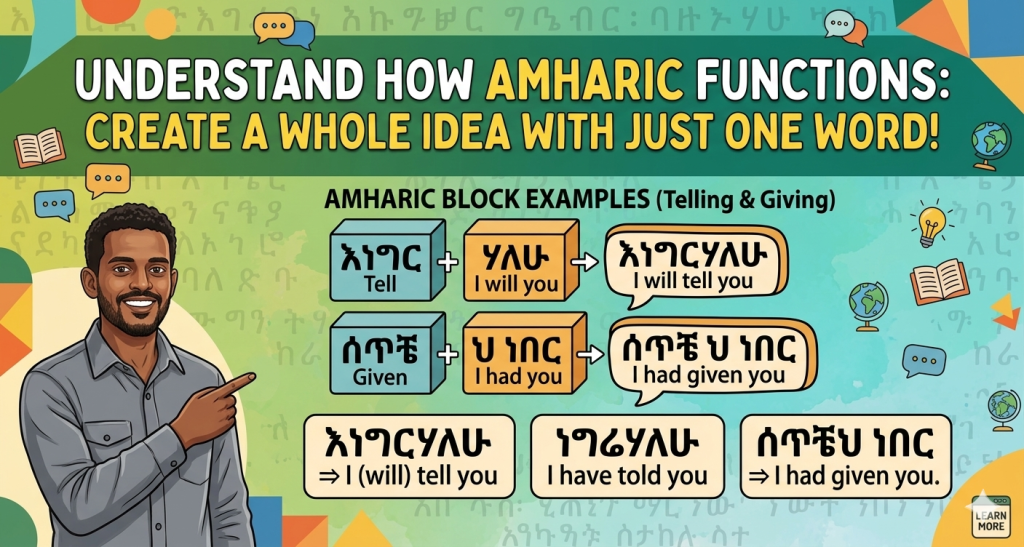
In Amharic, we can make an entire phrase or even a sentence using only a single word. In this lesson, you’ll discover how a subject, object, and verb can all blend into a single word to express a whole thought in Amharic. Let me show you some examples:
- እነግርሃለሁ = I (will) tell you. (Simple Present / Future)
- ነግሬሃለሁ = I have told you. (Present Perfect)
- ነገርኩህ = I told you. (Simple Past)
That’s 3 or 4 English words… but only 1 word in Amharic. Can you guess what part means ‘you’ in these words? Comment below.
Amharic is an “agglutinative” language. This means it functions like Lego blocks; we take a root verb and “glue” the subject and the object onto it as prefixes or suffixes. This is one of the most important steps in mastering Amharic because one word can carry the meaning of an entire English sentence.
Next, to help you master these rules and get comfortable using them, we’ll use three infinitive verbs as examples, and we’ll conjugate them in the six tenses in positive and negative, and then we’ll change them to commands too. By the end of this post, you’ll have a clear grasp of how these grammar rules work. Let’s dive in with three common verbs: መንገር (to tell), መስማት (to hear/to listen to), and መስጠት (to give).
A. መንገር (To Tell)
| Tense | Positive (አዎንታዊ) | Negative (አሉታዊ) |
| Present/Future | እነግርሃለሁ (I will tell you) | አልነግርህም (I won’t tell you) |
| Present Continuous | እየነገርኩህ ነው (I’m telling you.) | እየነገርኩህ አይደለም (I’m not telling you) |
| Present Perfect | ነግሬሃለሁ (I’ve told you) | አልነገርኩህም (I haven’t told you.) |
| Simple Past | ነገርኩህ (I told you.) | አልነገርኩህም (I didn’t tell you.) |
| Past Continuous | እየነገርኩህ ነበር (I was telling you) | እየነገርኩህ አልነበረም (I wasn’t telling you) |
| Past Perfect | ነግሬህ ነበር (I had told you) | አልነገርኩህም ነበር (I hadn’t told you) |
Examples:
- ነግሬህ ነበር አንተ ግን አትሰማም። (I had told you, but you wouldn’t listen.)
- እየነገርኩህ ነበር፣ አንተ ግን ስሜትህን ብቻ ነው የምታዳምጠው። (I was telling you, but you were only listening to your emotions/feelings.)
B. መስማት (To Listen/Hear)
| Tense | Positive (አዎንታዊ) | Negative (አሉታዊ) |
| Present/Future | እሰማሃለሁ (I’ll listen to you) | አልሰማህም (I won’t listen to you) |
| Present Continuous | እየሰማሁህ ነው (I am listening) | እየሰማሁህ አይደለም (I’m not listening) |
| Present Perfect | ሰምቼሃለሁ (I have heard you) | አልሰማሁህም (I haven’t heard you) |
| Simple Past | ሰማሁህ (I heard you) | አልሰማሁህም (I didn’t hear you) |
| Past Continuous | እየሰማሁህ ነበር (I was listening) | እየሰማሁህ አልነበረም (I wasn’t listening) |
| Past Perfect | ሰምቼህ ነበር (I had heard you) | አልሰማሁህም ነበር (I hadn’t heard you) |
Note: In English, “I am hearing you” is rare. We usually say “I can hear you” or “I am listening to you.”
C. መስጠት (To Give)
| Tense | Positive (አዎንታዊ) | Negative (አሉታዊ) |
| Present/Future | እሰጥሃለሁ (I will give you) | አልሰጥህም (I won’t give you) |
| Present Continuous | እየሰጠሁህ ነው (I am giving you) | እየሰጠሁህ አይደለም (I’m not giving you) |
| Present Perfect | ሰጥቼሃለሁ (I have given you) | አልሰጠሁህም (I haven’t given you) |
| Simple Past | ሰጠሁህ (I gave you) | አልሰጠሁህም (I didn’t give you) |
| Past Continuous | እየሰጠሁህ ነበር (I was giving you) | እየሰጠሁህ አልነበረም (I wasn’t giving you) |
| Past Perfect | ሰጥቼህ ነበር (I had given you) | አልሰጠሁህም ነበር (I hadn’t given you) |
The Flip: Reversing the Roles:
Now, we switch! The subject is “You” (አንተ), and the object is “Me” (እኔ). Instead of ‘I‘ doing something to ‘You,’ let’s see what happens when ‘You‘ do something to ‘Me.'”
In this case, the verb ends with “-ኝ” to represent “me.”
| Tense | Positive (አዎንታዊ) | Negative (አሉታዊ) |
| Present/Future | ትሰጠኛለህ (You will give me) | አትሰጠኝም (You won’t give me) |
| Present Continuous | እየሰጠኸኝ ነው (You are giving me) | እየሰጠኸኝ አይደለም (You are not giving me) |
| Present Perfect | ሰጥተኸኛል (You have given me) | አልሰጠኸኝም (You haven’t given me) |
| Simple Past | ሰጠኸኝ (You gave me) | አልሰጠኸኝም (You didn’t give me) |
| Past Continuous | እየሰጠኸኝ ነበር (You were giving me) | እየሰጠኸኝ አልነበረም (You weren’t giving me) |
| Past Perfect | ሰጥተኸኝ ነበር (You had given me) | አልሰጠኸኝም ነበር (You hadn’t given me) |
2. Commands (ትእዛዝ)
To turn these into commands, follow this table:
| Verb | Positive Command | Negative Command |
| መንገር (Tell) | ንገረኝ (Tell me) | አትንገረኝ (Don’t tell me) |
| መስማት (Listen) | ስማኝ (Listen to me) | አትስማኝ (Don’t listen to me) |
| መስጠት (Give) | ስጠኝ (Give me) | አትስጠኝ (Don’t give me) |
🎯 Final Review Quiz
Try to translate these based on the rules we learned:
- How do you say “I told you” in one word?
- If “ስጠኝ” is “Give me,” how do you say “Don’t give me“?
- What is the difference between “ነገርኩህ” and “እነግርሃለሁ“?
- Translate: “ትሰጠኛለህ?”
- Convert “I will tell you” (እነግርሃለሁ) into its negative form.
- Use the root መስማት to create a command: “Listen to me!“
- Why do we call Amharic an “agglutinative” language?
- How do you say “Won’t you give me?” (Negative Question)
- If “ነገረኝ” means “He told me,” what does “አልነገረኝም” mean?